Facing a world filled with uncertainty, ambiguity, complexity, changeability and scarcity, an emerging aim in global higher education is to produce graduates who are not only knowledgeable in their field, but also culturally and academically agile. They should be able to diagnose the norms and expectations of a new academic environment; to adapt their learning and communication strategies to meet different expectations effectively; to critically evaluate the strengths and limitations of different academic cultures; and also integrate and synthesize perspectives from diverse cultures and traditions. This requires moving beyond simple ‘orientation’ for university students to embedded, scaffolded, and reflective support that fosters intercultural academic competence.
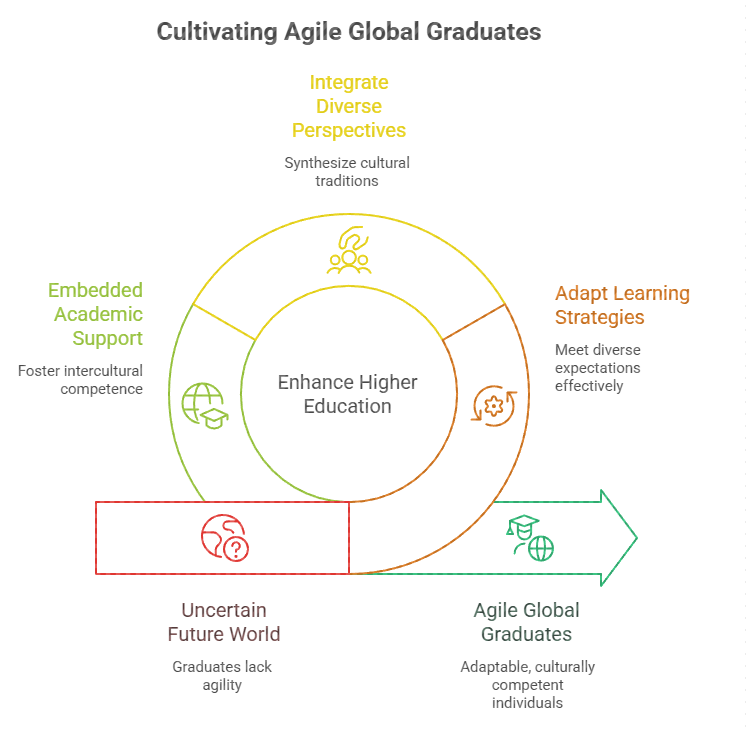
Figure 1 Cultivating Global Graduates
ALC Provision
The Xi’an Jiaotong-Liverpool University (XJTLU) Academic Literacies Centre (ALC) was established following the School of Languages (SoL) Review in AY24-25 as a replacement of Y2 EAP modules. Its objectives include: 1) providing embedded and ad hoc educational support in language and academic skills to departments, 2) integrating educationally valuable forms of AI into student learning, and 3) providing a bespoke support service to enhance student attainment. The ALC is split into 12 teams: 10 teams which mirror the 10 Schools / Academies at XJTLU (with a single team for the multiple departments at the Entrepreneur College - XEC) and two teams which work with PG students (PSE, PG-R) on an overarching basis. This article summarises some practices of collaboration between the ALC and the School of Humanities and Social Sciences (HSS).
Previously, HSS Year 2 students studied EAP113, where they learned subject-specific academic skills and language. All Y2 EAP modules were removed from degree programme specifications from AY25/26, which updated EAP provision in line with university strategic objectives. The ALC aims to implement a proactive, multi-tiered support system designed to embed academic literacies directly into the HSS degree programme curricula and provides targeted support to students. In particular, the aim is to embed language support into core Stage 2 modules across Translation and Interpreting, Media and Communication Studies, China Studies, Applied Linguistics, English and Business, English and Communication Studies and International Relations. This involves co-teaching lectures and seminars, developing and grading assessments, and providing module-specific workshops and consultations. In this way, students’ discipline skills can be enhanced through the Content and Language Integrated Learning (CLIL) Method.
Implementation of CLIL for Translation and Interpreting Students
Starting in AY25/26 S1, ALC lecturers began providing embedded language support to Y2 Translation and Interpreting students through the Content and Language Integrated Learning Method. There is a wide range of translation types students are working on, from literary translation, technical translation and medical translation to audiovisual translation and more. Authentic texts from specialist domains (economics, law, and advertising) were used as the primary language teaching materials. Instead of a language lesson on the passive voice, analysing its use in EU technical reports in Source Language (SL), then practising translating excerpts, discussing how and why the passive is used in the Target Language (TL), would help students build extralinguistic knowledge and domain-specific language competence simultaneously. In this model, the lecturer employs translation tasks as language-learning tasks that stimulate students’ specific linguistic decision-making in completing them. That is Task-Based Language Teaching (TBLT) for translators. Example tasks include: 1) Gist Translation/Summarization: encouraging students’ comprehension of core meaning and syntactic compression/ expansion; 2) Paraphrasing in the Source Text (ST): enhancing flexibility and deep understanding before working onto the Target Text (TT); 3) Multiple Version Translation: translating the text into three different registers (e.g., formal, neutral, informal) or translating for different readerships (e.g., children, adults, experts in this field), which significantly hones students’ control over tone and style; 4) Sight Translation: developing agility, syntactic anticipation and students’ real-time processing by leveraging their content and language skill.
Culture differences are an important element in language teaching, particularly in the Translation and Interpreting field. ‘Cultural gloss’ exercises were used in the CLIL teaching method. How would students translate ‘a concept/item’ from SL to a TL where such a thing doesn’t exist? The task is not to produce a perfect translation, but to write a translator’s note that analyses the cultural problems and proposes solutions. Translation isn’t all about written language. Students could work with subtitles, voice-over scripts, localised websites, and social media content to understand language in a multimodal context and promote their multimodal literacy. The best language teaching for translation students abolishes the wall between ‘language class’ and ‘translation class’. Integrating language directly into content prepares students for the realities of the translation and interpreting market. It transforms them from passive language learners into active, analytical, and resourceful language mediators who understand that translation is an act of communicating specialised meaning across linguistic and cultural boundaries.
In XTJLU, programmes are generally credit- and time-constrained, and integrating language and content makes efficient use of contact hours. Language improvement normally happens organically via the challenge of comprehending and re-expressing sophisticated content. It avoids the common student complaint of a disconnect between ‘translation theory/practice classes’ (subject lecture/seminars) and separate ‘language enhancement classes’ (EAP). This collaboration creates a more coherent learning journey for the students, and the curriculum is more holistic and purpose-driven.
Implementation of CLIL for Communication Students
The Department of Media and Communication (DMC) offers eight modules for Y2 HSS students over two semesters. Embedding support across such a wide range of modules with a single ALC lecturer presented both a unique opportunity and posed some challenges for the ALC provisions. Collaboration with multiple modules presented an opportunity to provide a more bespoke service, allowing language and study skills support to target specific areas of need identified by the course lecturers within each syllabus. However, a challenge also lay in terms of how to maximize student support over multiple modules, allocating sufficient class time to instill the academic skills targeted, while maintaining effective coordination among several subject-specific lecturers each with their own timetables, curricula, and assessment deadlines.
Prior to the commencement of the 25/26 AY, initial meetings and consultations established the framework for collaboration. An overview of the specialised academic and language support the ALC team could offer, emphasizing the relevant areas of experience and expertise of EAP lecturers and the typical core elements of a Y2 EAP curricula, was provided to the DMC; meanwhile, the DMC leadership were able to identify and communicate areas where they anticipated the greatest student needs would exist. In this way, a strong foundation connecting the needs of the HSS department with more nuanced ALC support could be built.
For Semester 1, ALC support was then allocated to three DMC modules on a weekly rotating basis, with the rotation pattern open to change depending on the ongoing needs expressed by each of the module lecturers. Regular communication ensured repetition of key language skills was avoided, with care being taken to accommodate requests for support at crucial points in the semester, e.g., prior to assessment deadlines. The model proved to be adaptable, with effective coordination allowing the ALC to respond directly to the specific needs identified by module leaders and to develop and integrate content and language materials accordingly.
Integrating Content and Language Support in Practice
Three sessions arranged in collaboration with DMC modules can serve to illustrate the integrated approach over S1. In the first case, a DMC lecturer requested ALC support instructing students on effective strategies when reading a challenging academic text. Faced with a dense exposition of unfamiliar theoretical jargon, students were often tempted to resort to an AI-generated summary of a core text, rather than working through the text itself. An 80-minute co-delivered tutorial session was then planned, incorporating three main stages: a DMC-led review of key points from the preceding lecture relating to the assigned reading; an EAP-led demonstration on reading strategies; and a student-centred group activity implementing the strategies on a section of assigned core text.
Following this format, the reading strategies demonstrated were then applied directly to the subject-specific text, rather than in a separate lesson with discrete materials, as would be the case under the previous Y2 EAP model. Specifically, the instructional skills guided students on how to effectively annotate their text, identifying key textual features, distinguishing stages in an author’s argument, and checking unfamiliar terminology using an online thesaurus. A sample annotated text showing a system of highlights for main ideas, signposting phrases, and unfamiliar vocabulary (see Appendix A) and accompanying mindmap (see Appendix B) served as a model for how to produce a coherent, simplified summary of a dense theory. Importantly, a demonstration on the limitations of relying on AI was also given, showing how a ChatGPT-generated paraphrase failed to adequately capture a key concept introduced by the author. Students were instead encouraged to use AI prompts more critically as a final step in the reading process, engaging with the text’s underlying assumptions to supplement, rather than replace, their own comprehension.
The co-taught activity worked well, as students successfully applied the strategies outlined to identify, check and discuss unfamiliar vocabulary, physically annotate the text, and reach agreement on the main ideas and overall structure, with groups producing a clear mindmap poster summarising the essential points of a difficult chapter on Communication theory (Sullivan, 2019). The DMC lecturer noted that the EAP-based reading methods were effective, with the model annotated text being particularly helpful.
In another case, a DMC module included a group PPT presentation as an assessed component. As such, ALC seminar support was requested to guide students with their PPT preparation and presentation. Two seminars were then delivered: the first focused on effective PPT design and methods of engaging an audience; the second focused on vocal delivery skills, body language, pronunciation, and rehearsal drills. A clearer understanding of the core task requirements set out was gained by attending the relevant weekly DMC lecture, with close reference to the assessment guidelines being paid in the subsequent ALC-led seminars. Open discussions and materials sharing further ensured effective coordination on key features expected in the task, with the DMC lecturer attending seminars to emphasize relevant points in the scoring rubric, alongside the EAP instruction.
The ALC instructor was then invited to attend the final assessed presentations, to participate in the post-PPT Q&A, and to subsequently share feedback on each group’s performance in the EAP-relevant sections of the rubric (namely, “Structure & Coherence” and “Collaboration & Engagement”). This proved to be an especially rewarding and productive process, with the collegiate nature of the grading and keen willingness from the DMC to embrace ALC instructional support and insights based on our experience grading oral presentations from an EAP perspective exemplifying the potential for constructive collaboration. Furthermore, it was noted by the DMC lecturer that a significant proportion of students successfully incorporated the EAP-focused skills, which had a clear positive impact on their final presentations, evidencing the effectiveness of the bespoke integrated approach to student attainment.
In a third case, ALC support was requested to guide students in how to paraphrase more effectively in order to avoid “patchwork writing” – a common issue in essay tasks requiring integration of academic sources. The DMC lecturer provided a core reading text that students would be expected to reference in their writing to use as the basis of the activities. In this way, an EAP seminar was designed on effective paraphrasing and source integration skills while at the same time exposing students to key concepts and claims within the core reading, thereby increasing familiarity with the assigned core text, its related theories and vocabulary. The seminar also provided another valuable opportunity to demonstrate the pitfalls of over-reliance on AI software, by highlighting the potential for inaccurate citations and lack of critical engagement with the source text in the resulting AI-generated paraphrases. The integrated academic and language skills format again proved successful, with positive feedback from both the DMC lecturer on the materials created, and from students in a post-semester survey regarding the lesson activities.
Challenges & Potential Areas for Improvement
The three examples described above of how the Content and Language Integrated Learning (CLIL) Method functions in practice give a strong indication of the overall success of the embedded ALC support provided throughout S1, based on the feedback of subject-specific lecturers, students, and our own experiences. However, the process was not without challenges, with two main areas identified that could be improved: timing and structure.
It was felt that timing was a major challenge to the CLIL model, due to the relatively low amount of class hours allocated to ALC lecturers compared to a traditional EAP module, limiting opportunities for student-centred exercises and developing teacher-student rapport. Whereas previous Y2 EAP courses would involve two weekly lectures of 100-minute duration, a single 50-minute seminar (or 80-minute co-delivered tutorial) significantly reduced the amount of time available for reviewing, practicing, and producing target language, and restricted the design of in-depth, slower-paced activities that encourage more relaxed oral English communication. Tasks were sometimes truncated and occasionally felt rushed, and achieving a balance between comprehensive language and skills instruction while incorporating engaging student-centred activities was challenging, especially in groups containing a range of language levels. Additionally, the rotating support across three modules and the relative irregularity of the meetings to some extent limited the development of teacher-student familiarity that is readily established in a more intensive EAP-based module.
The relatively ad hoc structure of the CLIL model also posed some challenges and provided notable insights from both instructors and students. For lecturers, the biggest impact was felt in the lack of a pre-determined syllabus, which necessitated a more intense ongoing workload to ensure the consistent preparation and delivery of high-quality materials on request throughout the semester. Meanwhile, the relative irregularity of the EAP-based sessions affected the student experience, with several noting in a post-semester feedback survey that although they valued the positive impact of the seminars, they would have preferred separately timetabled EAP sessions so that they did not “lose” the opportunity during that time to focus on the discipline-specific content in more depth. From a pedagogical perspective, the lack of a separate EAP syllabus with a clear overview of weekly learning outcomes and targeted skills may likewise have impacted the overall coherence of the sessions.
One potential solution to address the aforementioned structural issue could be to create a semi-formalised “working ALC-EAP syllabus” containing an inventory of language and study skills-based topics and tasks that subject-specific lecturers could then utilize as and when needed, providing an over-arching framework but remaining flexible to change. In this way, module leaders could effectively choose from a “menu” of EAP-related skills to match with their syllabus topics prior to the semester beginning, with ALC lecturers refining and adapting these as the semester progresses according to the needs of students, directly addressing issues identified in formative submissions or areas of weakness noted in seminars and homework tasks as they arise. An overview of planned topics could also be included in a Module Handbook and/or Learning Mall Online course page to provide students with a more coherent frame of reference for the kinds of instructional skills they could expect to be given through the ALC integrated support, which although not rigidly fixed, would still remove much of the “surprise” element of the EAP-based content replacing their usual subject-specific seminars.
Similarly, with regard to the challenge of reduced time allotted to EAP-led sessions, an effective solution may be to allocate separately timetabled hours to ALC embedded teaching, rather than being substituted for module seminar times. This would necessarily be a reduction compared to the previous Y2 EAP model; however, a middle ground balance could be found whereby students received regular and consistent exposure to EAP-focused content, but with fewer than the four hours set out under the traditional model and without the accompanying burden of separate EAP assessments. An optimal compromise could therefore be, for example, to dedicate two weekly hours of ALC-EAP scheduled support, with sessions designed to target and practice discipline-specific study skills while facilitating oral discussion and critical reflection of key concepts identified by module lecturers. Such a proposed format would halve the number of timetabled hours and significantly reduce the workload of students compared to the former EAP module, yet still afford sufficient time to cultivate the language and critical thinking skills through student-centred activities that are essential to their success in an English Medium Institution.
Insights & Overall Reflections
Traditional EAP class often focuses on a language as an object of study. To build academic literacy, we can see a core pedagogical shift, from teaching EAP as a single module, with learning outcomes independent of discipline requirement, to seeing language as a tool for learning and thinking. This is a move from learning about language to learning through language. From language to academic literacy, this adaptation is a shared responsibility. The institution must provide explicit, structured support, while the student engages in active, reflective learning. The language teachers’ role transforms from an instructor of rules to a guide and analyst of academic discourse. They empower students not just to speak and write correctly, but to think, argue, and participate fully in the academic world. The goal is to help students become independent, critical, confident members of their academic communities.
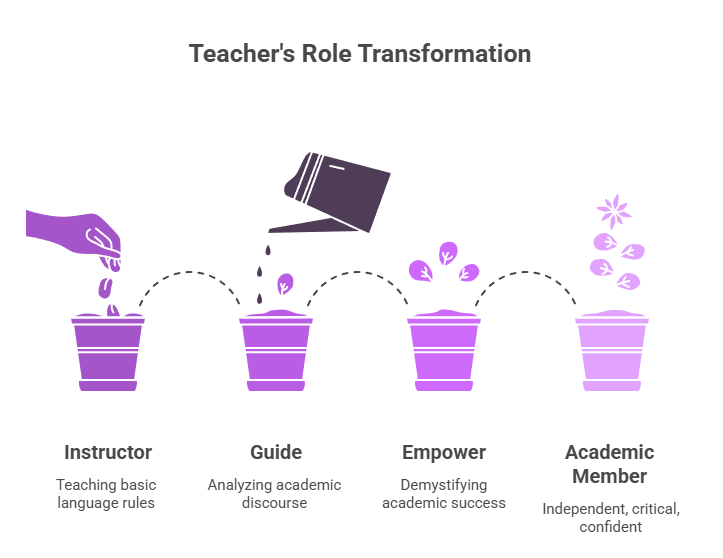
Figure 2 Transformation of Teacher's Role
Despite the challenges noted, our experience implementing a Content and Language Integrated Learning Method in pursuit of these goals was overwhelmingly positive. Perhaps most crucially, the willingness of HSS colleagues to constructively coordinate the delivery of EAP-focused content – welcoming our presence in lectures, sharing relevant materials, exchanging feedback and suggestions – all contributed to a collaborative working environment, to the maximum benefit of students. From an ALC perspective, our adaptability proved to be our key asset, with challenges posed by the reduced timing and lack of a fixed EAP structure both largely surmounted by a more flexible approach to seminar planning. Through our ability to adapt lesson content in “real time”, we were able to enhance opportunities to practice target language and more effectively balance subject-specific and EAP-focused support. Looking back, the open and constructive dialogue established with HSS colleagues prior to the semester, and continuing throughout, was a major contributor to our ability to effectively adapt and integrate EAP content. Looking forward, further improvements are undoubtedly available, with a more optimal balance regarding the structure and timing of EAP-integrated learning certainly achievable.
Overall, these experiences have shown us that the bespoke approach to embedded ALC support can be highly successful.
Figure 3 ALC Lecturer Delivers an Embedded DMC Seminar
References
Sullivan, J. L. (2019). Media audiences: Effects, users, institutions, and power. Sage.
Appendix A
Annotated Text
Note 1 The text is taken from chapter 1 of Media audiences: Effects, users, institutions, and power (Sullivan, 2019).
Appendix B
Mind Map Summary of Assigned Text
Note 2 The mind map served as an example summary of a section of academic text (Sullivan, 2019).


