Abstract
Generative AI has made a familiar assessment assumption harder to sustain: that a submitted product is a clear record of a student's own thinking. This article reflects on the redesign of the SAT005 Introduction to Emerging Technologies video essay assessment at Xi'an Jiaotong-Liverpool University. The module asked students to combine Student Real Voice narration with at least one AI-generated voice segment, making both human and AI contributions visible in a single multimodal task. What began as a practical requirement gradually developed into a wider assessment idea: Human-AI Syntegration. The framework proposed here centres on three principles: Human Judgement, AI Augmentation, and Ethical Disclosure. It suggests that the purpose of assessment in an AI-rich environment is not to remove AI from student work, but to design tasks where students remain responsible for decisions, verification, communication, and ownership.
Keywords: Generative AI; assessment design; multimodal assessment; hybrid intelligence; academic integrity; student judgement
1. Rethinking Assessment in the Age of Generative AI
For many years, assessment in language and academic skills development has rested on a fairly simple assumption: student work can be read as evidence of student thinking. Students have always drawn on textbooks, websites, peer discussion, and teacher feedback, but the main work of generating, shaping, and communicating ideas was still expected to be recognisably human.
Generative AI has unsettled that assumption. In a short period of time, students have gained access to tools that can produce summaries, outlines, explanations, scripts, images, voiceovers, and complete multimodal artefacts. As these tools become part of everyday study habits, assessment can no longer treat AI use as an unusual exception. The more useful question is how AI is changing the ways students generate ideas, make decisions, evaluate information, and communicate understanding.
The issue is especially visible in written assessment. Essays have traditionally been used to judge subject knowledge, critical thinking, and academic communication. Today, a polished essay can be produced within minutes from a limited prompt. That does not make writing irrelevant, but it does make the relationship between written output and student learning less transparent. It also raises practical questions about authorship, independent judgement, evidence checking, and accountability.
Debates about AI in education are often framed as a choice between restriction and acceptance: either block AI in order to protect existing assessment practices, or embrace it with few changes to how learning is judged. Neither position is sufficient. If AI is now part of students' learning environment, assessment needs to do more than permit or prohibit its use. It needs to make clear what kinds of human contribution still matter and how those contributions can be demonstrated.
One useful starting point is the idea of complementarity in human-AI systems. McDowell (2025) discusses Spiess's argument that AI should be designed with human decision-makers in mind, while McLaughlin and Spiess (2024) argue that AI creates value when it supports people in situations of uncertainty while leaving final judgement and decision-making in human hands. This perspective shifts attention away from whether humans or machines perform better in isolation and towards how they can contribute different strengths within a shared process.
Applied to assessment, complementarity suggests that the goal is not to remove AI from student work, but to preserve meaningful human agency within AI-supported work. AI may add speed, scale, generative capacity, and production support. Students, however, must still define problems, make choices, check information, judge quality, explain decisions, and take responsibility for what they submit.
The work described in this article grew from that concern. It explores an assessment approach based on Human-AI Syntegration: a way of designing tasks so that students learn to work with AI responsibly, critically, and transparently. Rather than asking only how assessment can prevent inappropriate AI use, the framework asks how assessment can help students show judgement while using AI as part of an authentic learning workflow.
2. Introduction and Context: SAT005
These questions emerged in SAT005 Introduction to Emerging Technologies, a Stage 1 pre-degree module taken by first-year undergraduate students before they progress into their degree programmes. In the 2025-2026 academic year, the module enrolled 243 students from a wide range of disciplinary backgrounds. This made it a useful space for exploring how students encounter new technologies and how they communicate their implications to others.
The module brings together three learning outcomes. Students are expected to describe major issues related to emerging technologies, including their societal, economic, and technical implications; use digital tools to plan and generate content; and communicate ideas clearly and effectively in English. These outcomes deliberately combine technological awareness, digital capability, and academic communication.
Generative AI made the assessment of these outcomes more complex. A conventional essay could still capture some aspects of research and written argument, but it would not fully reflect the module's emphasis on digital production, audience communication, and the practical use of technology. Understanding an emerging technology is not only a matter of writing about it. Students also need to select a case, explain technical ideas accessibly, interpret wider consequences, and use digital tools to shape a coherent message.
For that reason, the module used an individual video essay as its main coursework assessment. Students produced a five-minute video on a selected emerging technology, grounded in a real-world case study. The task required them to analyse both technical foundations and broader social implications while combining research, scripting, narration, visual design, editing, and oral communication.
The video essay also matched the communication practices students increasingly meet beyond the classroom. Knowledge is often shared through combinations of speech, image, data visualisation, editing, and platform-specific media conventions. The assessment therefore asked students to communicate across modes, not simply to transfer an essay into video form.
The design also aligned with XJTLU's Education + AI Strategic Framework, which emphasises the syntegration of Human Intelligence and Digital Intelligence while keeping contextual wisdom, ethical discernment, and human judgement at the centre. SAT005 did not treat AI as an external problem to be managed after the assessment had been designed. Instead, the assessment became a place to consider how AI might be incorporated while still keeping student learning visible.
3. Methodology: Implementing the Hybrid Narration Model
Once the video essay format had been selected, the next question was how AI could be included in a way that was educationally meaningful, transparent, and consistent with the module outcomes. AI tools could help students brainstorm, draft scripts, generate images, produce voiceovers, and edit media. At the same time, unrestricted AI use could make it harder to see students' own understanding and communication ability.
To manage this balance, the SAT005 teaching team adopted a Hybrid Narration Model. Students were required to appear on camera for at least 50% of the video, and this on-camera presence had to overlap with their Student Real Voice narration. They also had to include at least one separate segment using AI-generated voiceover.
This requirement served several purposes. Student Real Voice kept oral communication at the centre of the task, allowing students to demonstrate fluency, clarity, and personal understanding in English. The AI-generated voiceover segment asked students to engage with emerging production technology directly, rather than only discussing such technology in abstract terms. Together, the two narration modes made the human and AI dimensions of the work visible.
Voice was chosen deliberately. In a video assessment, voice is one of the clearest signs of contribution. Student narration shows personal engagement, understanding, and communicative control. AI narration shows how a digital tool can be used in production. By requiring both, the task avoided hiding AI use while also avoiding a fully automated product.
The requirement was supported by expectations around disclosure. Students were asked to identify AI-generated elements and acknowledge the tools used in their production process. The aim was not to catch students out, but to normalise transparency and accountability as part of AI-supported academic work.
At first, the 50/50 requirement was mainly a practical assessment decision. It helped balance communication assessment, digital capability development, responsible AI use, and academic integrity. During the later development of the EASE project, however, its wider significance became clearer. The point was not the percentage itself. The point was the relationship it created between human contribution and AI contribution.
Students remained responsible for ideas, decisions, evidence checking, and the final product. AI functioned as a support for generation, iteration, and production. What began as a coursework rule gradually became a broader design principle: assessment should make human contribution visible, AI use transparent, and collaboration between the two open to reflection.
4. The Human-AI Syntegration Framework
The Human-AI Syntegration Framework developed from this shift in thinking. Syntegration is used here to describe an assessment approach that deliberately combines human judgement and AI capability within a transparent workflow. In this approach, students may use AI to support learning and production, but they retain ownership of ideas, decisions, verification, and accountability.
The framework is built around three connected principles: Human Judgement, AI Augmentation, and Ethical Disclosure.
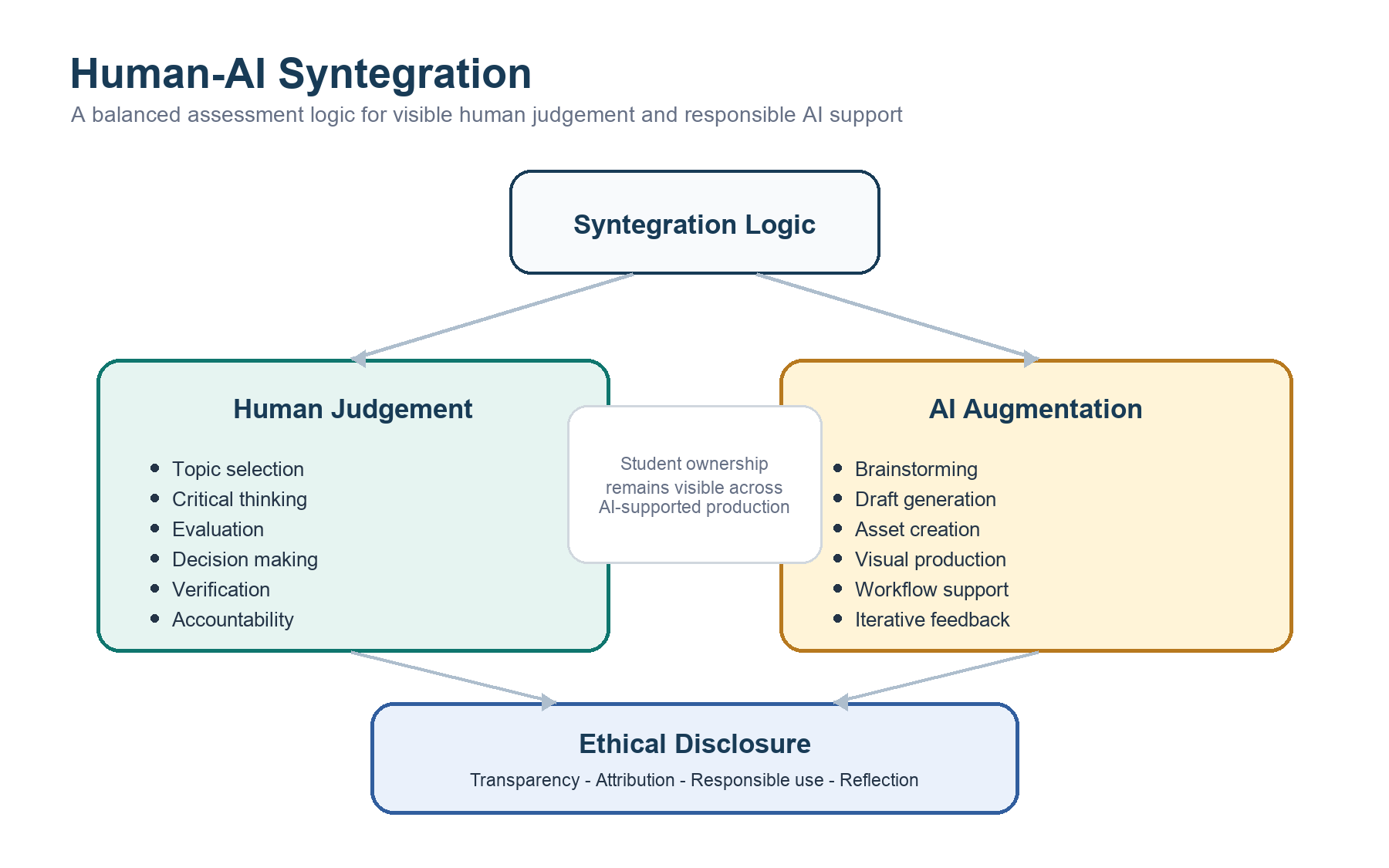
Figure 1. Human-AI Syntegration Framework.
| Principle |
Student responsibility |
AI role |
Examples |
| Human Judgement |
Define focus, evaluate evidence, decide, and own conclusions. |
Offer suggestions or alternatives. |
Some students chose IoT as their broad topic and healthcare as their specific case analysis. When they were confused about the distinctions among IoT, AI, and robotics, they asked the AI to provide concrete examples of each technology and offer suggestions for their proposed cases. The students then evaluated these suggestions, weigh the evidence, and made their own final decisions. |
| AI Augmentation |
Set purpose, judge fit, and integrate outputs. |
Support drafting, media creation, and workflow. |
During the research stage, many students located raw data that supports a specific argument in their project. They set the purpose for using AI (e.g., to create a clear chart) and used it to speed up and enhance data visualization. Afterward, they critically judged the fit of the AI-generated visual—checking its accuracy and relevance—before integrating it into their final workflow. |
| Ethical Disclosure |
Explain what was used and why it mattered. |
Make contributions traceable and discussable. |
When students used AI tools (e.g., Doubao) to generate images, a watermark was typically present, and we encouraged students to retain and displayed it. Similarly, for charts or graphs, if students use AI to assist with generation, they were asked to clearly indicated both the AI tool used and the original source of the data. For instance: "Table 2 is generated using Canva and includes proper data source citations. |
Human Judgement
Students should remain the primary intellectual agents in the learning process. AI tools can suggest, generate, summarise, or rephrase, but students must still define the problem, choose the focus, evaluate evidence, organise the argument, and approve the final submission. In assessment terms, this principle matters because learning is shown not only through output, but through the decisions that shape that output.
AI Augmentation
AI can be a useful partner in ideation, drafting, media production, visual design, and workflow management. The framework does not treat AI support as automatically suspicious. The key distinction is that AI should extend students' productive capacity rather than replace their thinking. AI contributes capability; students contribute purpose, direction, and judgement.
Ethical Disclosure
AI use should be visible enough for teachers and students to discuss it honestly. Students should be encouraged to identify AI-generated content, name the tools they used, and explain how those tools contributed to the final product. This principle connects academic integrity with learning design: disclosure is not only a compliance requirement, but also a way to help students reflect on their own working process.
Translating Syntegration into Assessment Design
A framework is only useful if it can guide practice. In a syntegrative assessment workflow, topic selection and problem definition remain mainly student-led. Students decide what they want to investigate, what case they will use, and what direction their inquiry should take. AI may help them explore possibilities, but it should not decide the focus for them.
During research, AI tools may support initial information gathering, summarisation, or idea generation. Students still need to check sources, judge relevance, and identify gaps. This is one of the most important learning moments, because AI can make weak information look fluent and confident. The student's responsibility is to slow down, verify, and decide what can be trusted.
In the content development stage, the relationship can become more collaborative. Students may use AI to test outlines, draft alternative phrasings, generate examples, or consider different perspectives. They remain responsible for the argument, the structure, and the fit between content and audience.
During production, AI may support voice synthesis, image generation, editing, subtitles, and other media elements. The final responsibility for coherence and communication still sits with the student. The workflow should end with verification, reflection, and disclosure so that accountability remains visible throughout the assessment lifecycle.
This model is not tied to a fixed numerical ratio. The 50/50 narration rule worked for SAT005 because it matched the goals of a video essay, but other modules may need different balances. The broader aim is to design assessment tasks where human judgement and AI support are both present, both visible, and both open to evaluation.

Figure 2. Syntegrative Content Creation Process.
5. Early Reflections and Future Directions
The framework was shaped not only by assessment theory, but also by early observations from the SAT005 implementation. These observations are not presented as formal research findings. They are practical reflections that helped clarify where students seemed to benefit from AI support and where they still needed guidance.
One clear pattern was that many students adapted quickly to AI-enabled production tools. They were willing to experiment with brainstorming tools, image generators, voice synthesis, and video editing support. Technical barriers were lower than expected, and students often learned new workflows independently once the task gave them a reason to do so.
The more difficult challenges were rarely technical. Students often needed support with selecting appropriate case studies, narrowing broad topics, judging the quality of sources, building coherent arguments, and interpreting assessment expectations. AI could speed up production, but it did not remove the need for critical thinking, contextual understanding, or academic judgement.
This reinforced a central assumption of the Syntegration Framework: the main educational challenge in AI-enhanced assessment may not be whether students can use AI tools, but whether they can exercise judgement within AI-supported workflows. Meaningful learning still depends on the ability to evaluate information, justify choices, communicate clearly, and take ownership of the final product.
The implementation also raised questions for future study. How do students understand the balance between their own contribution and AI contribution? What does meaningful ownership look like in AI-assisted work? How can disclosure be designed so that it supports reflection rather than simply adding another compliance step? Can Human-AI collaboration itself become something that is assessed?
These questions informed the EASE-funded project Engineering a Syntegration Blueprint: A Scalable 50/50 Hybrid Intelligence Framework for Multimodal Assessment. The project moves the work from initial assessment design towards systematic refinement and evaluation. Rather than asking only whether students use AI, it asks how students understand, negotiate, and reflect on collaboration with AI during the learning process.
The project also has value beyond one module. Although SAT005 used a specific narration requirement, the framework can be adapted to other subjects, formats, and educational levels. Its long-term contribution may lie in helping educators design assessment tasks that make human contribution visible, AI use transparent, and student judgement central.
6. Practical Tips for AI-Enhanced Assessment Design
The SAT005 experience suggests several practical suggestions for colleagues who are beginning to redesign assessment in response to generative AI. First, decide what must remain clearly human in the task. Depending on the module, this may be oral explanation, live decision-making, source evaluation, reflection on choices, or the ability to connect theory with a specific context. Once this human contribution is named, AI use can be planned around it instead of treated as a vague risk.
Second, make AI use discussable. Students are more likely to use AI responsibly when the task gives them a language for explaining what they did. A simple disclosure requirement can help, but it should go beyond listing tools. Students can be asked to identify which parts of the process were AI-supported, what they accepted or rejected, and how they checked the quality of outputs. This turns disclosure into a learning activity rather than a formality at the end.
Third, assess judgement, not only production. In an AI-supported workflow, a polished final artefact may hide weak reasoning. Assessment criteria therefore need to recognise the choices behind the product: the relevance of the case study, the credibility of sources, the logic of the explanation, the fit between media choices and audience, and the student's ability to reflect on limitations. These criteria help students see that AI can support production, but it cannot carry responsibility for academic judgement.
Finally, give students enough structure to support responsible experimentation. The 50/50 narration rule worked in SAT005 because it made expectations visible while still leaving room for creative production. Other modules may need different forms of balance. The important design question is not whether the ratio is exactly equal, but whether the task creates a visible and meaningful relationship between student contribution and AI support.
In this sense, Human-AI Syntegration is not an additional layer placed on top of existing assessment. It is a way of making assessment design more explicit. It asks teachers to clarify what evidence of learning they need, where AI can usefully support the process, and how students can show that they remain accountable for the work they submit.
A limitation of the current discussion is that it is based on early teaching reflections rather than a completed empirical study. Further evidence is needed to understand how students experience the 50/50 model, how consistently they disclose AI-supported work, and how the framework performs across different modules and disciplines.
Conclusion
Generative AI has challenged long-standing assumptions about educational assessment. As AI becomes part of students' normal learning workflows, questions about authorship, transparency, accountability, and evidence of learning will become more complex. The response should not be limited to excluding AI or allowing it without structure. Assessment needs to be redesigned so that responsible AI engagement and meaningful human contribution can be seen together.
This article has described the development of the Human-AI Syntegration Framework through the redesign of a multimodal video essay assessment in SAT005 Introduction to Emerging Technologies. A practical requirement, the combination of Student Real Voice and AI-generated voiceover, became the starting point for a broader assessment philosophy based on Human Judgement, AI Augmentation, and Ethical Disclosure.
The framework is not a finished solution or a single model to copy. It is a way to begin asking better questions about assessment in an AI-rich environment. If human and artificial intelligence increasingly work side by side, the future of assessment may depend on how well educators design tasks that keep judgement, creativity, responsibility, and learning visible.
Declaration of Generative AI Use
Generative AI tools, including OpenAI's ChatGPT and Gemini, were used to support the consolidation and language editing of this manuscript and the visual development of the two figures. The authors reviewed, revised, and approved all AI-assisted outputs and remain responsible for the article's arguments, accuracy, references, and final content.
References
McDowell, M. (2025) 'Designing AI That Keeps Human Decision-Makers in Mind', Stanford Graduate School of Business Insights. Available at: https://www.gsb.stanford.edu/insights/designing-ai-keeps-human-decision-makers-mind (Accessed: 17 June 2026).
McLaughlin, B. and Spiess, J. (2024) Designing Algorithmic Recommendations to Achieve Human-AI Complementarity. arXiv preprint arXiv:2405.01484. Available at: https://arxiv.org/abs/2405.01484 (Accessed: 17 June 2026).


